
Top AdNabu Alternatives for Smarter Google Shopping Feeds
If you want your products to shine at the top of Google Shopping, it takes more than competitive bids—it depends on how well your product feed communicates with Google’s algorithms. Creating a feed that’s current, relevant, and keyword-rich is critical for improving your ad performance and standing out in an increasingly crowded market.
Many stores start with apps like AdNabu, which is especially convenient for Shopify users new to Google Shopping. AdNabu makes it simple to upload basic product information and resolve common data errors. But as inventory grows and campaigns become more sophisticated, merchants often find themselves held back by generic or incomplete listings, manual edits, or persistent feed errors.
To grow further, you may need tools that go beyond the basics and actively enhance your product information, reduce labor, and open doors to new channels. This guide introduces you to fresh solutions that can help you optimize and future-proof your Google Shopping feeds.
When Basic Feed Apps Hold You Back
The quality of your product data directly affects how often and where your items appear on Google Shopping. If your feed only lists “Blue Pants” instead of “Men’s Navy Blue Slim Fit Chinos,” you’re missing prime impressions. Even worse, Google Merchant Center can disapprove products missing identifiers like GTINs, accurate colors, or size data, leading to lost sales opportunities.
Free or entry-level apps tend to just move your existing data into Google, but they don’t fill in the blanks or adapt titles and descriptions for search intent. A basic Google Shopping Shopify integration can get you started, but over time, manual fixes and error resolution become a time sink. Eventually, you need a platform that does more of the heavy lifting—and fast.
Why Consider Replacing AdNabu?
While AdNabu is a solid choice for getting started, here are reasons you might want a more robust alternative:
1. Platform Flexibility:
AdNabu is built for Shopify and may not support you if you branch out to WooCommerce, BigCommerce, or custom content management systems. Hybrid brands or those with changing tech stacks need more flexibility.
2. Automated Data Enrichment:
Many feed management tools, including AdNabu, can’t create new data or infer missing fields. If you update your store but forget to specify material, gender, or color, the tool can’t fill those gaps for you, often resulting in product disapprovals.
3. Next-Level Optimization:
Platforms limited to templates and simple rules won’t adjust your content for trending search terms or adapt messaging for TikTok, Meta, or Pinterest. As retail becomes more omnichannel, optimizing each listing for its audience is key.
Essential Features to Look For
The best alternatives offer features that are not only smart but also save time and reduce manual work:
Visual Attribute Extraction: AI-powered platforms can pull details directly from your product images, filling in color, size, and style, so that you don’t have to enter these manually.
Dynamic Content Generation: Look for solutions that automatically rewrite titles and descriptions to reflect search trends, keywords, and compliance standards—giving every listing the best chance to rank well.
Proactive Feed Auditing: Robust tools scan for incomplete or incorrect fields before they hit Google, helping you resolve issues fast and avoid downtime.
Multi-Platform Readiness: As brands branch out, your feed management should easily create and sync catalogs to not only Google Shopping but also Meta, TikTok, and more.
Top Unique Alternatives to AdNabu
Below are several notable options that help future-proof your feed management and expand your reach:
FeedOn

FeedOn leverages artificial intelligence to enhance and correct your product feeds in real time. It does not just move your data to Google—it audits your catalog, identifies gaps, and fills them using Vision AI, which can scan product images to extract attributes like material or color. In addition, FeedOn customizes your product copy for each sales channel, providing optimized fit for Google, Meta, and others, right from a single dashboard. With a generous plan for small catalogs, it’s accessible to growing stores.
Channable
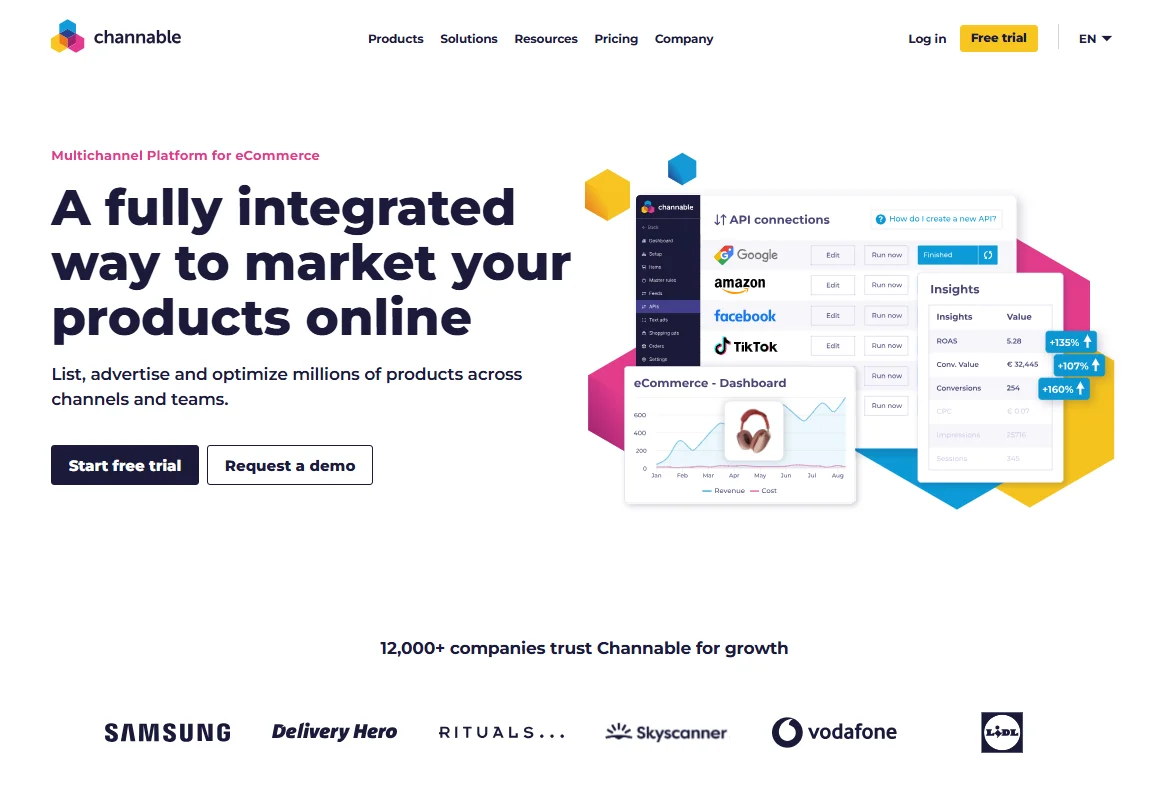
Channable is a versatile platform well-suited for brands that love granular control. It is not just for Google Shopping—Channable manages feeds for a wide range of marketplaces, and its rule-based logic is robust. While it’s ideal for tech-savvy users, it doesn’t offer built-in AI for generating new data or rewriting copy, so some manual work remains.
DataFeedWatch
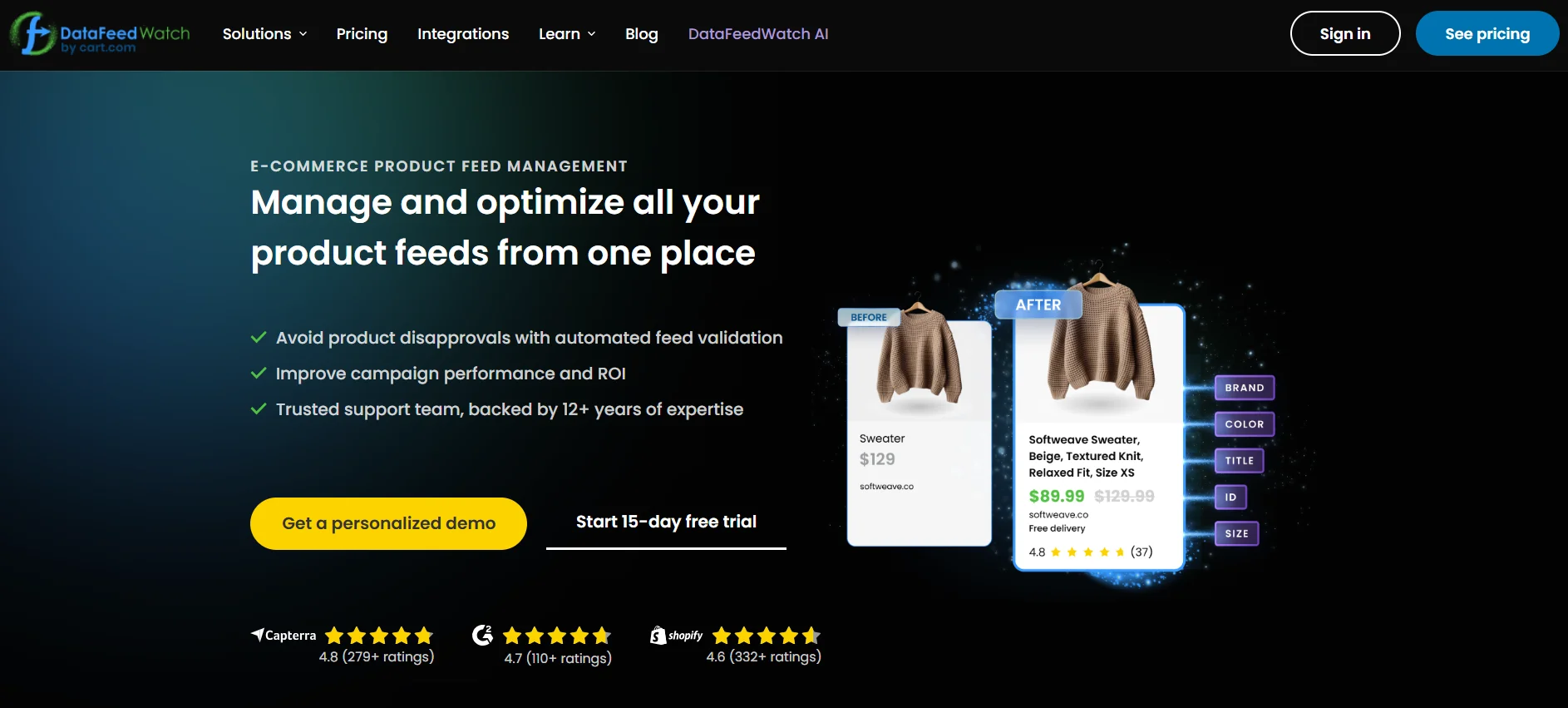
Best for teams looking to broadcast their catalogs to multiple marketplaces. DataFeedWatch stands out for its easy-to-learn mapping templates and wide channel support, which helps stores push products to places like Amazon, eBay, and Facebook. However, like AdNabu, it requires you to keep your underlying data clean and doesn’t auto-generate missing attributes.
Feedonomics

Feedonomics is a managed service catering to enterprise brands. Their human specialists handle mapping, optimization, and error resolution for large, complex catalogs. This can save brands time but comes at a premium price and less direct control, making it better for global retailers with deep product lines and large budgets.
Ready to Upgrade Your Product Feed?
Relying on basic feed apps or manual updates can leave your best products buried in Google Shopping search results, while incomplete data leads to recurring headaches and missed sales. Modern, AI-powered tools allow you to automate enrichment, streamline multi-channel publishing, and instantly spot errors before they impact revenue.
Take a moment to review how much time your team spends patching up errors or rewriting listings. If you’re ready to reclaim that time and see better results, try a solution like FeedOn or any of the alternatives listed above. Smarter feed management is one of the most valuable upgrades you can make to drive growth in your e-commerce business.
Frequently Asked Questions
Why should I consider alternatives to AdNabu?
AdNabu is a great starting point for Shopify stores. However, as your business grows, you will likely need more advanced features. Basic apps usually just copy the data you already have. If your store lacks details like color or material, basic tools cannot fill in the blanks. Upgrading to a more advanced platform gives you better control and helps you fix missing data so your ads perform better.
What features should I prioritize in a Google Shopping feed tool?
You want a tool that actively improves your product listings. Look for software that offers automated attribute extraction, which pulls missing details right from your photos. You also need a tool that rewrites your titles and descriptions to match what shoppers search for. Finally, pick a platform with built-in audits to catch errors before Google disapproves your items.
How does AI improve feed optimization?
Artificial intelligence takes the hard work out of managing your inventory data. Instead of typing out every detail by hand, AI tools scan your product images to find missing information instantly. AI can also rewrite your titles to include the best keywords for Google Shopping. This keeps your listings highly visible and compliant without hours of manual labor.
What are the benefits of using FeedOn over AdNabu?
FeedOn does more than just move your data from Shopify to Google. While AdNabu relies on the information currently in your store, FeedOn uses visual AI to create missing attributes straight from your product photos. It actively repairs your catalog and writes custom copy for different channels. This helps you avoid Google Merchant Center errors and capture more sales.
Can these alternatives integrate with Shopify or WooCommerce?
Yes, the top feed management platforms connect easily with major e-commerce builders. Tools like FeedOn integrate smoothly with Shopify, WooCommerce, and custom setups. Once you link your store, the software pulls your inventory data, improves it, and syncs the updated feeds directly to your advertising accounts.
What are the pricing options for these alternatives?
Pricing varies based on the tool you pick and the size of your product catalog. Heavy enterprise services can cost thousands of dollars a month. Luckily, modern self-serve options offer much better value for growing brands. For instance, FeedOn has a free plan for up to 200 products. Paid plans start at just $39 per month, making it very budget-friendly as you scale.